Category Archives: Cameras

How Quality Casings Can Improve Security Cameras

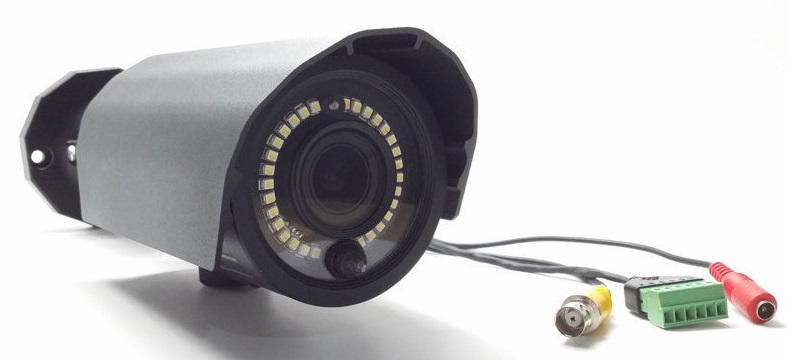
Camera casings, otherwise known as outdoor camera housings enable a security camera to function in weather that standard security cameras can’t stand up to. Heavy rainfall and storms can often damage normal cameras, or leave them temporarily inoperable, which can leave a security system with a weakness that can be exploited by intruders.

Camera casings can be fitted to a wide range of security cameras. They improve not only their functionality in adverse weather conditions but also increase their durability overall. There are many different casings and housings available, but it is important to check the compatibility of the case with an existing camera before purchasing.

Some cameras come with outdoor housings pre-installed, although usually for an increased price over a standard camera. This may be a more cost-effective method for those who are installing a new security system and is worth considering beforehand.
 

Features To Look Out For On High-End Cameras

It comes as no surprise that the more expensive high-end cameras tend to have more features than cheaper models. Of the higher-end cameras there are several features that set them above the rest.

Night Vision

Night vision comes at a high priority as crimes have a tendency to occur after dark.

Motion Detection

Motion detection is also desirable, but be sure that the sensitivity and range can be adjusted. This helps to stop windblown debris from being picked up by the alarm system unnecessarily. By properly tuning the system, you can also have a text message sent to your phone when motion is detected.

Saving Video and Images

The ability to save video and pictures externally is a useful feature to have, which comes in very helpful for law enforcement purposes. If a crime is caught on camera, the ability to play back video at high speed will help you find the event, and slow motion will help you determine exactly what happened.

External Recording

Higher-end models come with a separate DVR to record video. This helps if a great deal if your cameras running all the time.

Efficient Wiring For Home Security Systems

Home security systems can become a jumbled array of different cameras, sensors and alarms. Along with each piece of equipment is some kind of wiring, usually power, but video and audio in some cases too. It all amounts to a large amount of wires that need to be organised somehow throughout the home. One way of doing just this is with an integrated home network.

An integrated home network consolidates all your wiring. Instead of many separate wires all daisy-chained through your walls, a network puts everything you need in a single, central hub. Wire then runs directly from this hub to each room, where modular outlets provide access to services.

Newly introduced wireless networking products can connect computers, cameras, or other devices, as can kits that use the existing electrical or telephone wiring in your house. Neither of these solutions, however, supports the connecting speeds of a hardwired, dedicated network.


Making Use Of CCTV Camera Kits

If you are just starting out in home security, buying a CCTV camera kit is a good way to begin surveying your premises. An average security camera kit package includes four cameras, each of which are weather resistant, use night visibility and record in high definition.

Because of the amount of cameras that are included, its possible to survey a large area in or around the home. This is useful as it allows you to install cameras in unison with each other, allowing for a large and effective amount of visual coverage. This is a much more effective and organised way of surveying than using just one camera at a time.

Camera kits allow you to watch from anywhere with the use of wireless networking. This works as the DVR can be connected to your home network, allowing footage to be streamed live and securely to your smartphone, tablet or laptop.

How Do Camera Batteries Work?

Camera batteries are essential for outdoor video capture and photography, for both surveillance and general use. But just how do these sources of power work and what are the eternal functions?

Essentially, most batteries contain three basic parts. Electrodes, an electrolyte and a separator. Within every battery are two electrodes, both of which are made of conductive material.

When a battery is powering a device like a camera, a series of chemical reactions occur in the electrodes. These are collectively known as oxidation-reduction (redox) reactions. These reactions result in the flow of ions between the anode and the cathode.

However, some of the most common batteries in use today are lithium-ion batteries, these power most consumer electronic devices. These batteries typically contain a carbon anode, a cathode made of lithium cobalt dioxide and an electrolyte containing a lithium salt in an organic solvent.